
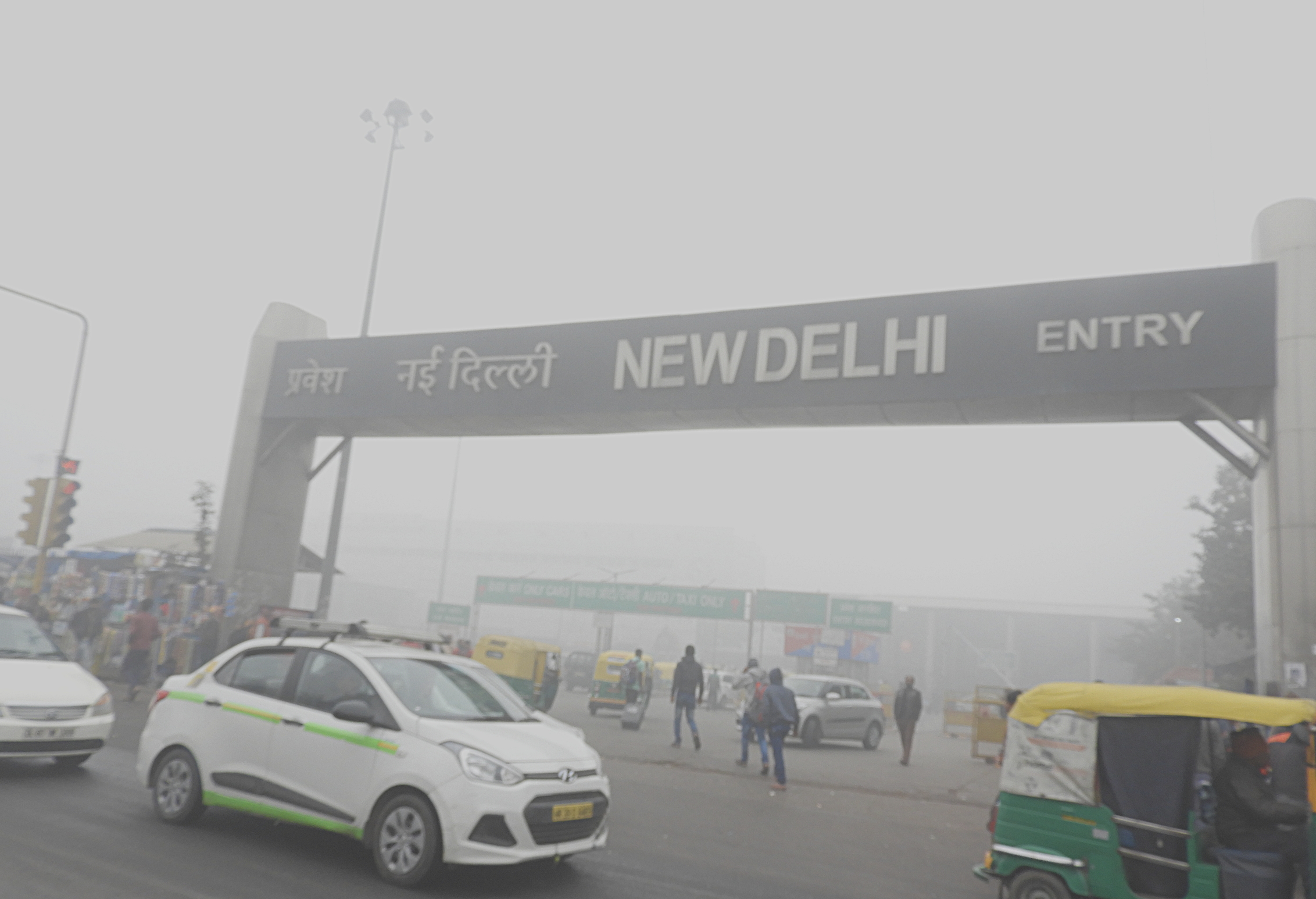
Recently, the dense pollution and smog enveloping New Delhi halted traffic on highways, forced schools to shut down and sent worried residents scurrying to buy air purifiers and masks. With the level of carcinogenic pollutants in this toxic haze becoming roughly 10 times the reading in Beijing (a city globally infamous for its polluted air), the situation in Delhi was rightly called a major public health emergency by experts.
In fact, according to the World Health Organization, poor air quality causes seven million premature deaths every year, making it the planet’s largest single environmental health risk. According to a study by The Lancet, India accounts for the maximum number of premature deaths from pollution in the world, with as many as 2.5 million people dying prematurely in the country in 2015 due to pollution-linked illnesses.
This is why reducing health risks caused by air pollution has become a matter of utmost urgency for India.
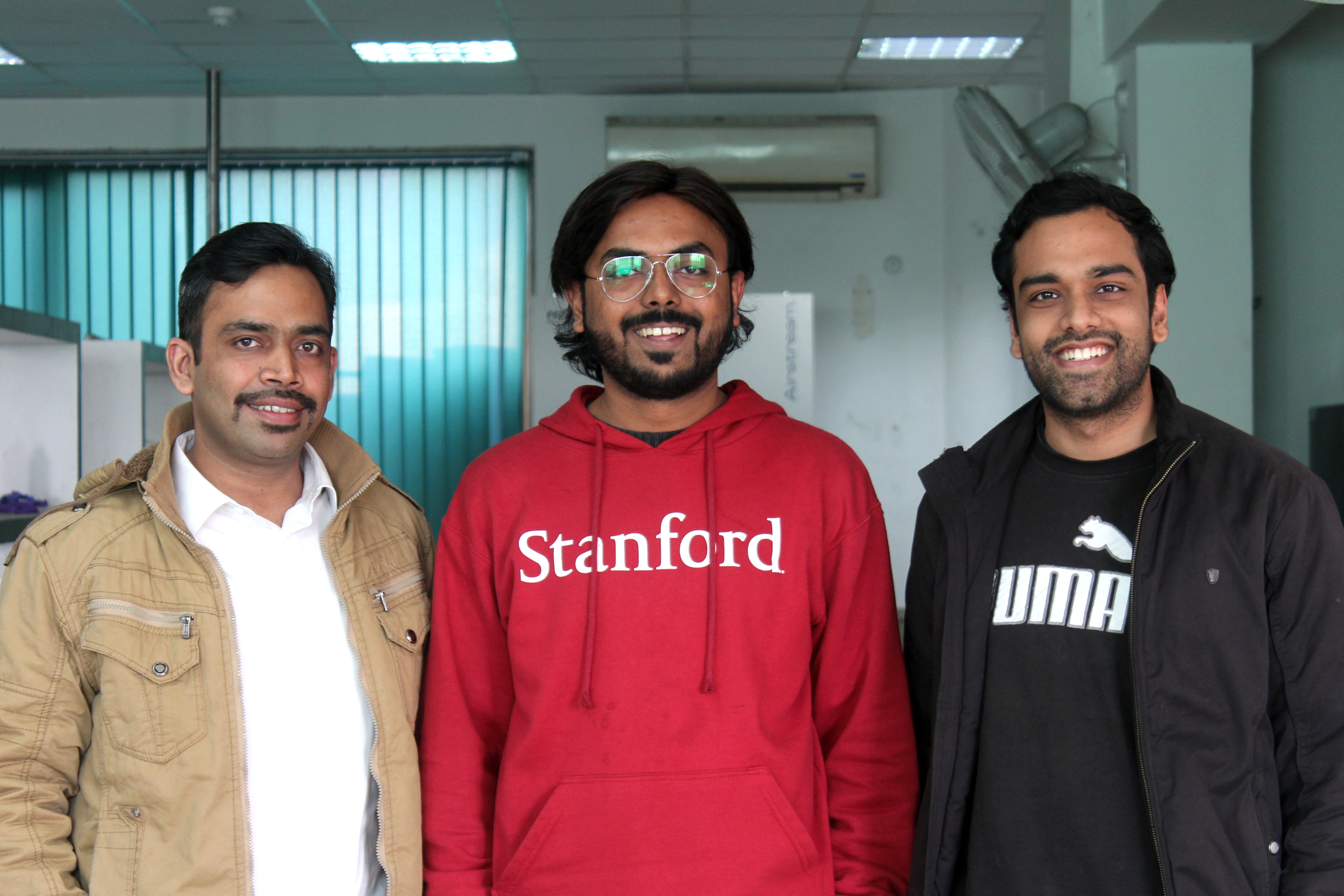
It was the aim of tackling this burgeoning health crisis that a bunch of scientists, doctors and engineers (from IIT, AIIMS, and Stanford University) gave up their high-paying jobs to plunge into the unchartered territory of entrepreneurship.
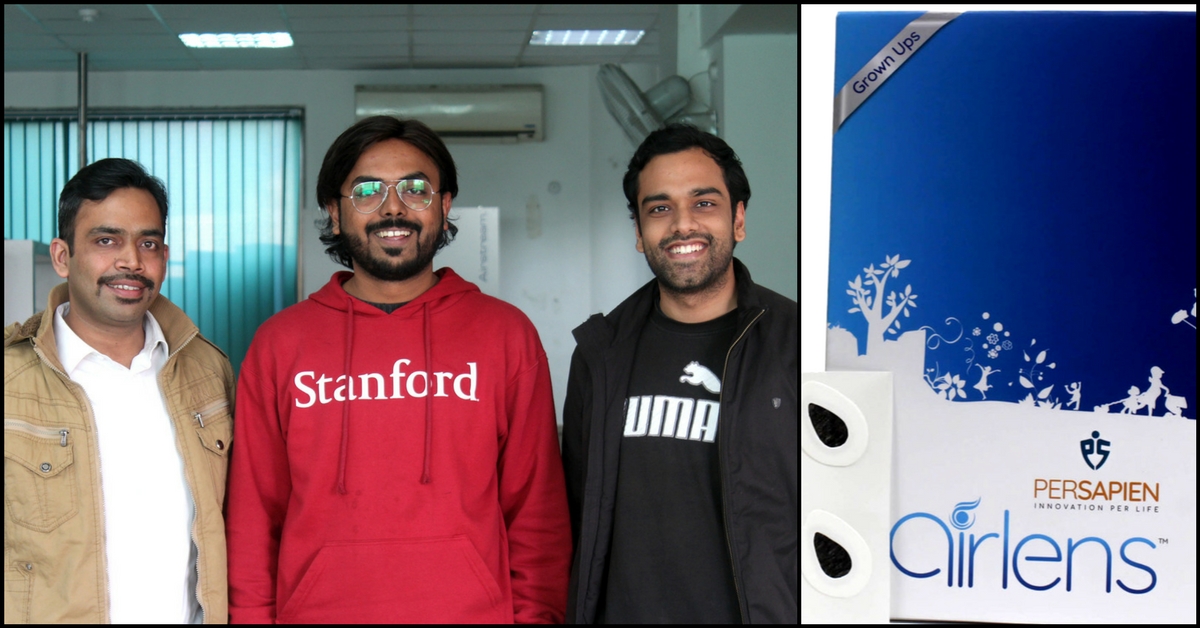
Under the aegis of Padmashri Prof. Randeep Guleria (Director of AIIMS) and Prof. Paul Yock, (Father of Biodesign, Stanford University), the talented team of Shashi Ranjan, Debayan Saha, Yogesh Agarwal, Akanksha Gupta and Harsh Sheth set up PerSapien Innovations in 2015.
In October 2017, PerSapien launched a nasal wearable device that can restrict the entry of pollutants into lungs. Since then, the amazing innovation has already touched more than 10 thousand lives!
“When we tried to develop a comfortable and user-friendly nasal filter, we realised that the state-of-art air purification technologies currently in use have high resistance to air flow and so, are not suitable for nasal filters.
It took our team two years of rigorous research to invent the Active Molecular Technology (AMT) that can efficiently filter PM 2.5, PM 10 and harmful gases with minimal breathing resistance.
AdvertisementWe have applied for a patent on this technology in the name of PerSapien, which stands for saving (per) each human (sapien) life”, says Debayan Saha, the co-founder of PerSapien who is also a former IITian, and Stanford-India Biodesign fellow.
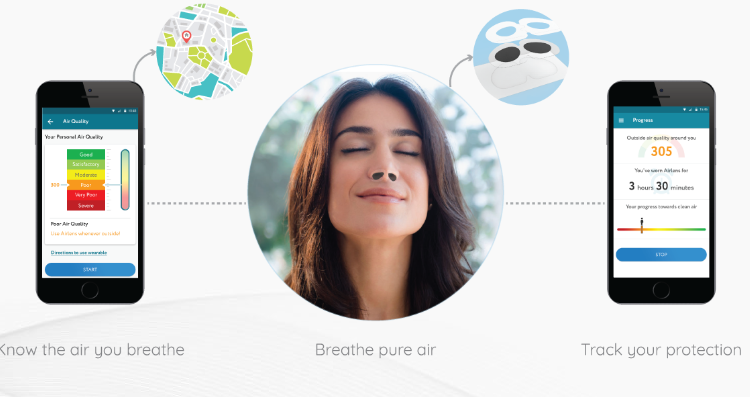
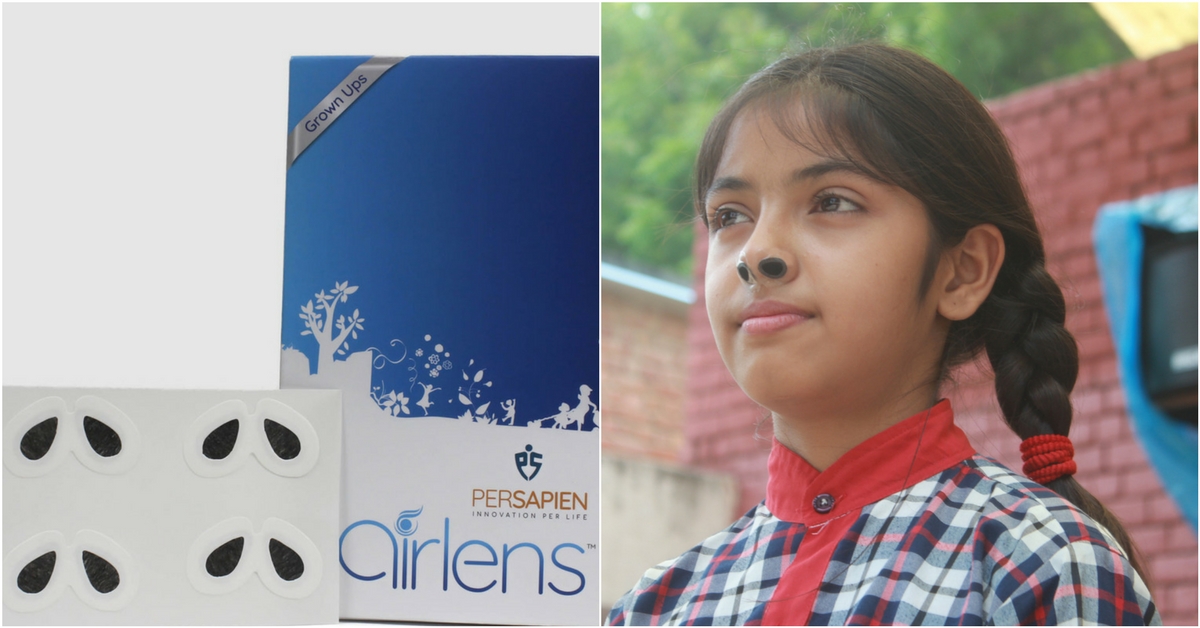
Based on this novel air purification technology, PerSapien’s easy-to-carry device — called Airlens — does not require any attachments and is barely visible when in use. The tiny product (its around 2 cm in size) does not need washing or cleaning either and has an use-and-throw component that economical enough to be replaced every day.
Bio-compatible according to ISO 10993, the medically safe device is also CE certified according to European Standards for Medical Devices. Airlen’s purification efficiency has also been tested through independent NABL certified labs, with the results showing that the device effectively purifies the air to the safe levels as recommended by regulatory bodies.
Persapien has also backed up Airlens with a support-and-feedback mobile app — called Airlens Data —that assesses the amount of protection achieved. This is done through an Air Quality Data System (also self-developed by the start-up) that informs users about the real-time quality of air in their immediate environment (within the radius of 1 km).
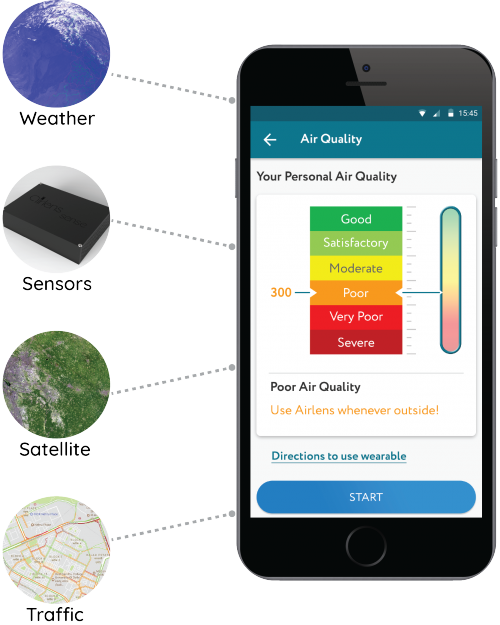
According to the PerSapien co-founder, the idea is to empower every citizen with the ‘Right to Information’ on air quality at a personal level.
“Currently, the government-installed sensors that provide the Air Quality Index (AQI) are typically located about 10-20 km away from users’ present location. As the AQI varies every 1 km and with time, this data is not in real time.
So, the team realized that personal-level AQI is required in real time to help users understand what is in the air that they are breathing. To achieve this goal, we developed an advanced data system that relies on GPS locations and powerful algorithms to take input data from satellite, traffic, weather forecasts and sensors.
This enables both healthy and sensitive users to take better decisions for their own health,” explains Debayan.
As of now, the device (which costs around Rs 500 per month i.e. Rs 15 per day) is available only for children aged 8 to 14. But the team is working on a device for adults and plans to launch it soon. The Airlens Data app, on the other hand, is for free to all and PerSapien’s contribution towards a cleaner, healthier India.
“Our vision is to empower children — arguably the worst sufferers of air pollution — with the right to breathe pure air. With this in mind, we have also taken the feedback of school children on Airlens to understand their perspective,” says Debayan.
Unsurprisingly, PerSapien’s incredible work has won the start-up several national and global accolades, including being the national winner at Pfizer-IIT Delhi Innovation programme, the runners-up at Berkeley California’s Global Health Innovation Challenge and among the Top 10 Promising Changemakers of Asia at DBS-NUS Singapore 2017.
Asked where PerSapien sees itself in the coming years, Debayan says that they will remain on the quest to innovate and create user-friendly solutions that will help the people of India. Understanding that the nasal filter can only provide short-term relief, the start-up is also focussing on long-term solutions for a sustainable future.
For instance, the team is already working on algorithms that can trace and pinpoint sources of pollution in different parts of Indian cities. This will help the government implement its pollution abatement policies in a better manner and actually measure its direct impact.
“We are also incorporating the feature of forecasting air quality, at least 2 days or more in advance, to enable both the citizens and the government plan for emergency situations such as severe pollution levels. The core idea is the same — to help reduce air pollution and safeguard the health of Indian citizens,” Debayan signs off.
Also Read: Solution To Delhi’s Smog Problem – This Moss Wall ‘Eats’ As Much Polluted Air As A Small Forest